
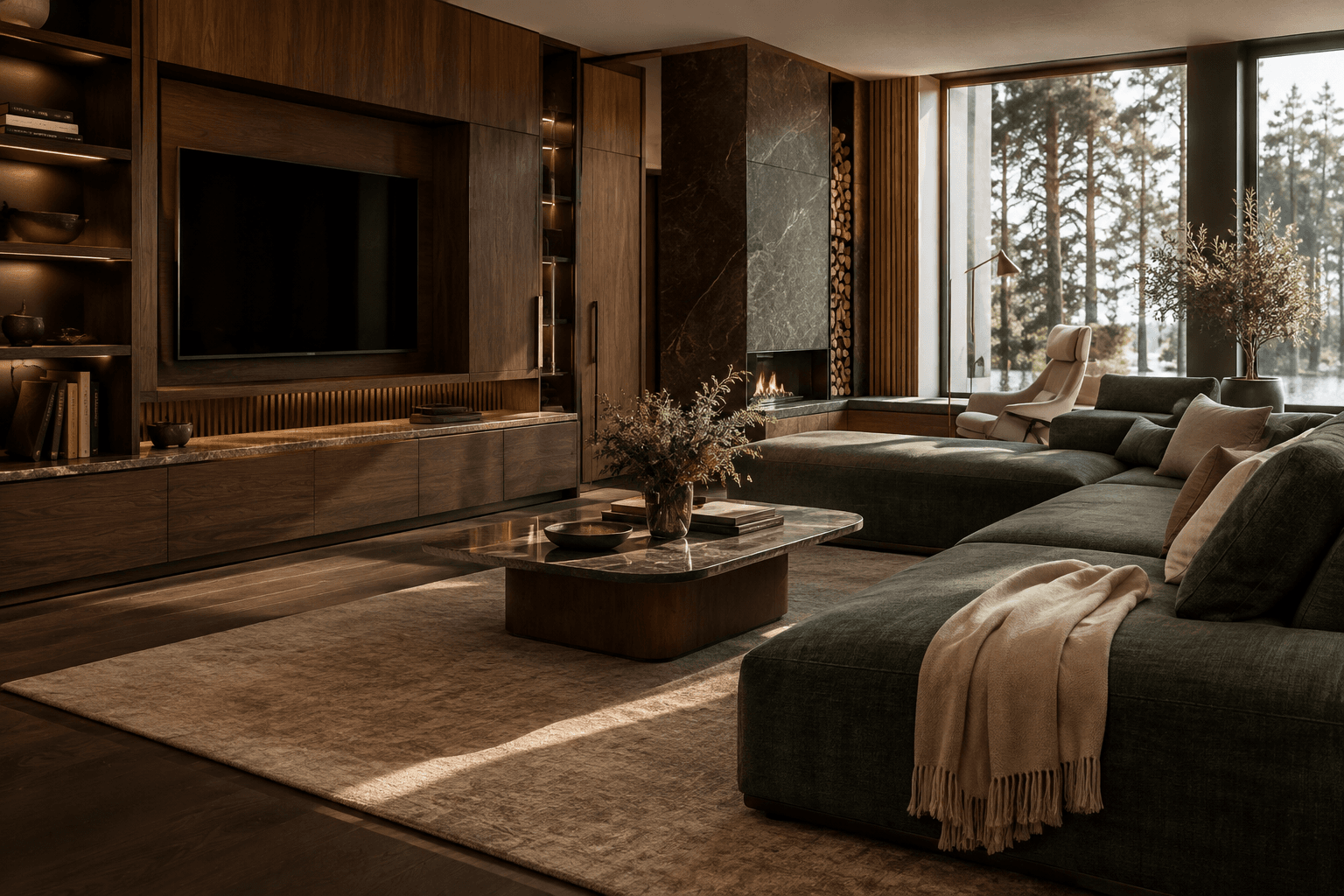
A cohesive interior comes from colour, texture and light. Compare material samples together rather than separately.
Choose a starting point
Start with an element that is unlikely to change often: the floor, a large rug, curtains or a piece of furniture you already own. Choose an upholstery shade that complements it, then bring in wood as an accent of warmth and texture.
There is no need to match every material to the same colour. Different but compatible shades often create more depth; repeat one or two tones in several places to make the room feel intentional.
Balance the textures
Smooth leather, a woven fabric and pronounced wood grain each draw the eye in a different way. If you choose several noticeable textures in one room, keep the other elements calmer. A smooth fabric can balance patterned wood, while a distinctive upholstery can be the main accent.
Before deciding, place the samples next to one another and view them in daylight and in the evening. A small piece of leather or fabric beside a wood finish can reveal colour clashes that are hard to see on a screen or in separate catalogues.
See how materials work at a larger scale
A small swatch does not always show how a fabric will look across an entire sofa. Before ordering, compare the samples with the furniture’s shape, the room’s lighting and the surrounding surfaces. If you are unsure, photograph the samples in different lighting while keeping the camera settings similar.
Wood can also show natural variation in tone and grain. For a more accurate choice, rely on a sample of the actual finish and the supplier’s information rather than assuming every piece will be identical.