
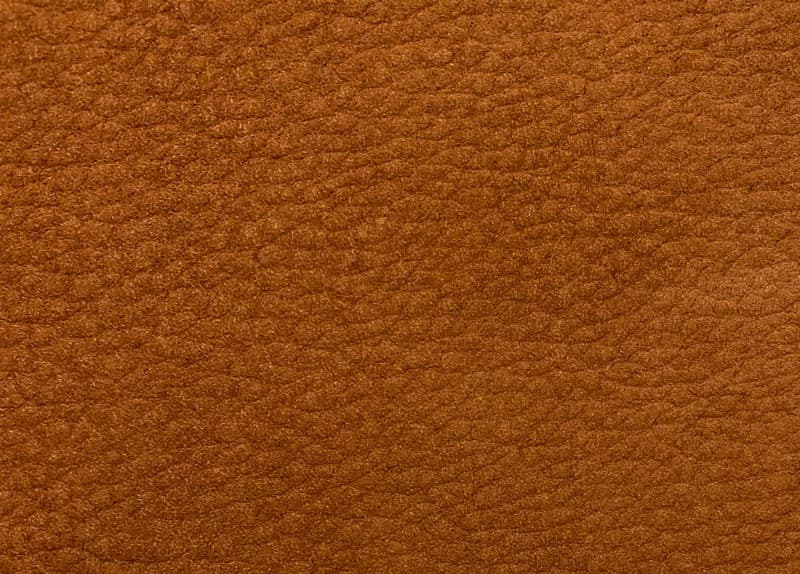
Natural markings and surface finish both shape how leather looks and how it should be cared for.
Natural variation is part of the material
Leather is a natural material, so small variations in colour and grain are to be expected. These characteristics may also vary across a single hide. They are not a repeated printed pattern and do not necessarily indicate a defect: each surface has developed differently.
A swatch and a finished piece may look slightly different. When choosing a shade, view a sample in real lighting and ask which natural characteristics are typical of the particular leather.
The finish changes the look and feel
Different leather finishes can emphasize the natural grain, create a more matte surface or add a pronounced texture. Feel, sheen and colour depth also vary. That is why a material name alone may not tell you exactly how leather will look or feel in use.
Compare actual samples if you are choosing between a smooth and textured surface or between matte and more pronounced finishes. If the supplier provides a technical sheet, check the leather type and care recommendations there.
Gentle care starts with the right instructions
For everyday care, remove dust with a soft, dry cloth. If something spills, follow the care instructions for that particular leather; hard rubbing or an unsuitable cleaner can leave marks. Test the recommended product in an inconspicuous area first.
Avoid placing leather furniture directly beside a heat source or leaving it in strong sunlight for long periods. Rather than assuming one method suits all leather, identify the finish and follow the manufacturer’s guidance.